How to Use This Blog

A Wayfarer is a person who is traveling through......life, a particular place, a circumstance, a stage of life, etc. Let's walk the road of adoption together. The journey is so much better with company!
---------------------------------
Much of this information is useful for any adoption, but this blog is designed to be a
RESOURCE BLOG for ETHIOPIAN ADOPTION.
I hope this blog will be helpful to you in your adoption whether you are considering, waiting or home. I started this blog when we were adopting and found there was next to nothing on the web in any orderly manner. I set about to collect information for myself and then for others. Now, there are more sites for resources, but still not much that brings it all together. I hope this blog will serve as a sort of clearing house for Ethiopian Adoption Information. Please feel free to contribute your knowledge through commenting.
---------------------------
You can search by topic in three ways. 1. Go to the "key word" tabs on top and open pages of links in those topics. 2. Use the "labels list" in the side bar or 3. use the "search bar" above the labels list. You can also browse the blog by month and year in the Posts section or in any of the above as well. The sidebar links are to sites outside of this blog. While I feel they provide good information, I can not vouch for each site with an approval rating. Use your own discernment for each. If you have more to add to the topic, please add it in the comment section of that page or post.
----------------------------------
And, please link to The Wayfarer Adoption Blog by putting my button on
your blog so others can use this resource too. Please link to this blog when ever you can and whenever you re-post things (or images) you have found here. Thanks!
The solid tabs are links to my other blogs for books and family. Check them out if you are interested.
Welcome to the journey!

Wednesday, June 8, 2011

New web site on nutrution

I just wanted to say that I have recently found the most amazing web site focusing on adoption nutrition. It covers issues from various countries and foster care. I gives loads of ideas and resources. I think it is a must see site. Go check it out.
http://adoptionnutrition.org/

Saturday, June 4, 2011

Kung Fu Panda 2: movie review

One of the movie options on our flight to and from Ethiopia was Kung Fu Panda (1).  The sequel is here.  Not that we really wanted more of Po, as much as we like him, 4-6 times through the first time was a bit more than we really wanted.  But, we like Po, and we have had a nearly 3 year separation, so we went to see his second movie.  Well, there has been lots of talk about this movie, Kung Fu Panda 2.  Yes, it is a movie that deals with the subject of adoption.  Of course everyone has their own opinion of it.  I will share mine here.   Feel free to share you opinion in the comments.  The more ideas on it the better others can make their own choices.


First a synopsis of the adoption related story line:
Po is struggling to find inner peace as his master suggests he should do before he can move forward with Kung Fu.  He has a strange memory while fighting some evil wolfs and sees a symbol on the arm band of one.  He goes in to a sort of trance and has to be rescued.  This bothers him a great deal.  He visits his father and asks him about his history.  Dad tells him that he "might be adopted".  And tells about how he appeared at his door and how he choose to raise him as his own son.  Po then is flustered and feels the empty hole of his past even more acutely.  He struggles with inward anger and frustration and wonders who he is really.
Off he goes to fight the big bad evil peacock.  Again he goes into a trance with memories coming at him due to the symbol on the peacocks feathers.  He nearly looses his life and certainly gets them all trapped.  Not good.  He nearly dies.  He is found and nursed back to health by a goat who says he is the one to kill the evil peacock.  He finds himself in an abandoned village with the goat and here his memories come to him and he remembers how he was orphaned and how he came to be in a basket at the door of his Dad.  He is sad and angry.  But, he knows the truth.
I am leaving out all the Kung Fu parts because they do not pertain to the adoption story.  However, I would use caution with kids under the age of 7 seeing this movie, as it is quite violent.
Po is told twice in this movie that his beginning was hard and unhappy, but he has the choice to determine how the rest of the story goes, and how it ends.  He finds his inner peace when he comes to terms with what is happened to make him an orphan and decided who he decided is.  Evil peacock rejects the notion that he can overcome his past bad choices and become a hero and better person.  He tries to convince Po that he too should be bitter and angry, full of hate because of his past.  But Po has found his inner peace and knows the choice he wants to make.  Po defeats the evil peacock who killed his first family.  He then comes to the conclusion that while he is the Dragon Warrior and he is a fearsome Kung Fu warrior, he is first and foremost his father's son.  That is his adoptive duck Dad.  He and Dad the duck have a sweet reunion.
The movie ends with a snapshot of a panda village and a Panda wise man saying "my son lives".  Who knows we may be getting Kung Fu Panda 3.

Ok, now my thoughts on this:
I think that this movie is going to be a great bridge to talking about the questions of adoption for OLDER kids.  I think it will bring fear to younger kids.  Only you can gauge if your child is ready for this.  If you have talked openly about this and your kids know their story, their place with you, that is ok to have questions, feelings and fears then all the better.  I think it would be a good idea to talk about some points in general before the movie and some points in specific after, allowing your child to express feelings, similarities and ask his or her own questions.  Of course, this may be best done the day after the movie or later in the day. Right after they are going to have too many feelings to be able to sit and discuss it.  I think it would be good to have their life book ready to look at together and leave it with them.  Be sure you have an extra copy before you do this, just in case. :)

Points from the movie that struck me:
  • OF COURSE he is adopted, I mean really, a duck and a panda. But, some families honestly do this to their kids. 
  • It is great that he has these conflicting emotions about being adopted and wondering where he came from, what is my story and who am I.  This is totally normal for any adopted kid.  I am glad that they are being realistic here. 
  • Most kids who are adopted come from hard places, with a difficult story.  Abandoned, orphaned, relinquished.  None of that is easy and there are so many variable in each of those.  This story gives the story violence and fear.  It is real and vivid and would be frightening for a younger child.  My boys are 5 and 6 and I would have preferred they did not see this level of violence, but it turned out ok.  I have been up every night for a week with one of them and working through fear related behavior from the other one during the day.  I am thinking this is the violence because they did this with Superman cartoon and other sorts of things like that, which we do not see much of.  
  • I think it is important to talk with your child about the differences between Po's story and theirs as well as the similarities.  Kids may fear there was violence in their past too.  Actually, the real fear here is that there is someone out there to blame for their time as an orphan and they may feel the desire for revenge.  Po does NOT kill Peacock out of revenge but a quest to protect what is true and right and good.  The movie is not super clear on that unless you have some understanding of Kung Fu, which children usually do not.  They think it is all fighting. 
  • Most kids are not going to find out more details than you already have to give them.  A quest for your family is not going to come up with much more than you already know.  At least for Ethiopian adoptions.  No wise goat is going to take you to your birth village and tell you your story.  Therapy could be helpful for regaining memories for kids adopted at an older age.  For most kids more of their story is not going to come.  That is a difference between real kids and Po. 
  • Everyone needs a story.  It is good to try to fill in what you know, even if you construct a this could be, or this could be scenario options/ideas for your child.  This will help give the "identity" they need until they can construct their own.  
  • I LOVE LOVE LOVE the concept they use here that your begining may have been hard but you can choose how it ends up and how you continue your story.  That is powerful. 
  • I think that another idea here is "killing the inner dragons".  That is to say Po had to kill the ideas that haunted him and his own negative feelings and thoughts in order to find inner peace.  He had to accept the hard parts of his story and decide to live in a positive way and embrace the good parts of his story.  It was only then that he was able to feel at peace, know who he is, his purpose and his story.  He gets to write the rest of his story himself and decide if it is a good one or a bad one.  Evil Peacock decided to make a bad story and his end was pretty bad.  Po decides to live a good story and he finds inner peace.  Don't we all have to do that?
  • I am super happy that Po had a loving adoptive father, who was supportive and proud of him.  I love that he went home knowing that was where he belonged and who he was.  I love that he was wanted and loved and cared for with joy.  I know that not all adoptive families are this way and that is a difference for some adult adoptees who watch this movie.
  • I think there could be a lot of conflicting feelings that come with the end scene of Po's birth father saying his son is alive.  There may be some idealized hope that a child could reunite with his or her birth family.  Some fear that they were wrongly removed (ok this is true sometimes).  There could be fodder here for fantasies of what their birth family was like and meeting them again.  Questions of is my story ture?  If Po believed his birth family was dead and maybe they are actually alive...... are my birth family still out there waiting for me or looking for me too?  This can be really conflicting and I wish they had left this part out.  In most cases the truth is the hard parts of death, poverty, neglect, abuse, etc.  Four younger children this scene could possibly be construed as Panda Heaven, but only for younger kids. Younger than 5. 
So, there you have it.  Now you can decide if you want to take your kids to see Kung Fu Panda 2 or wait.  I would say whatever you decide, be prepared to initiate talking about it soon afterwards, no matter the age of your child.

Trailers and official web pages:

http://www.kungfupanda.com/http://www.rottentomatoes.com/m/kung_fu_panda_the_kaboom_of_doom/
http://www.youtube.com/watch?v=GEgk9XsFCR0

Friday, June 3, 2011

State Department update on Ethiopian Adoptions 6/2011

I just wanted to alert you to a new notice from the State Department regarding Ethiopian Adoptions. It looks like they are indeed processing cases at a rate that will allow them to investigate the validity of the orphan status of each child. This is good. I would say that it would be better to do this prior to the adoptive parents traveling and receiving referral.  This sets up a great deal of potential disappointment. At this time the US embassy seems to be also conducting similar research after the child has been declared adopted and is irrevocable. So, yet another issue. I hope they continue to check into the validity of the children's orphan status and pursue options for children to stay in their first home. I also hope they will adjust the order in which they do things so that it brings less borderline ethical issues in the the interaction with potential and adoptive parents. Just be aware of these things as you  proceed with your adoption. At this time there have been few cases which have had issues, but there have been some. 

Here is the notice: 

you can also access it on their site at: http://adoption.state.gov/country_information/country_specific_alerts_notices.php?alert_notice_type=notices&alert_notice_file=ethiopia_8

Ethiopia

June 2, 2011

Notice: Update on adoption case processing by MOWCYA in Ethiopia

The U.S. Embassy in Ethiopia has received information from the Ministry of Women, Children and Youth Affairs indicating that processing of cases that received a court summons prior to March 8, 2011 is still ongoing.  This exceeds their estimated 15-20 days to expeditiously process this caseload, as indicated in our April 5 notice.  The Embassy also understands that processing of cases with court summons after March 8 is proceeding at 5 cases per day, and there is no indication that these numbers will increase in the short term.
Prospective Adoptive Parents and parents awaiting final approval of their match from the Ministry of Women, Children and Youth Affairs are cautioned to anticipate continued and considerable delays and are encouraged to remain in contact with their agency for updates to their case.
The Embassy's Adoptions Unit can be reached at consadoptionaddis@state.gov.
Please continue to monitor http://adoption.state.gov for updated information as it becomes available.

Thursday, May 26, 2011

Names

Names. What is in a name and what to do about it. Common questions for adoptive parents.

What does your child's Ethiopian name mean?
Here are some sites to help you determine the meaning of your child's name. Try Ethiopian, Amharic, Eritrean names when you have the option to search.
Some are under construction, but should be back up soon, so check it again if it does not work now.
Best sites:
http://ethiopia.limbo13.com/index.php/ethiopian_names/
http://myethiopianame.bravehost.com/
http://www.aacasa.org.au/meanings-of-ethiopian-names.html

Other sites:
http://www.baby-names-and-stuff.com/ethiopian-baby-names/
http://www.top-100-baby-names-search.com/meanings-of-ethiopian-names.html
http://babynamesworld.parentsconnect.com/category-ethiopian-names.html
http://www.babynamescountry.com/origins/ethiopian_baby_names1.html
 
Here you can purchase your name meaning and translation and written for you:
http://www.ethiotrans.com/ethiopian_names.htm

How did my child get his or her name?
  1. First name is the name given by a parent or significant caregiver.This name usually has significance. A child is named for a blessing, hope or promise, a character trait they hope the child will have or a saint or holy name. Example: Muluken means good day. A translation from an Ethiopian man I met says that this name has a deeper meaning. It means, "the day I got all I ever wanted or dreamed of". This is a name for a boy, a father counting his blessings on the day his son is born. What a great name! 
  2. Second name is the name of the child's father. This keeps track of who they belong to, their line of heritage. 
  3. Most kids will also have a third name which will be their grandfather on their father's side name. In some places they will add more in order to trace the family line. In adoption papers rarely is the third or fourth or beyond name mentioned or recorded. An older child may or may not be aware of those names. 
  4. Your child's name gives him or her roots. This is very important. 
Site and blog that do a good job explaining names and naming:
http://www.aacasa.org.au/meanings-of-ethiopian-names.html
 http://ianfamily.blogspot.com/2010/01/ethiopian-names-and-meanings.html

What about nick names?
 A child may or may not know his or her full name. Nick names are common.
  1. You will often find a shortened version of the name. For example: Nateneal or Natan is usually Nati. Muluken is Mulu. Freiwhat is Frei. Abigel is Abi.
  2. A child may also be called the name for little sister, youngest brother, sweet tiny one, my son, or another such enearing name. The child may actually believe that is their name. 
  3. In English we often add an y on the end of a name for a term of endearment. This is also the case in Ethiopia. It is a bit different but is similar in concept. Yay or y/e/i  is often added to the end of a name. Example: Kedus would be Keduse. Nateneal is Nati. So the name can be shortened and add the fondness syllable or just have it added to the end of the full name.
Changing a name? Good or Bad?
  • This is a very personal decision. One that deserves a great deal of thought and sensitivity. 
  • If your child is an infant he or she could likely more easily adapt to a new name. 
  • An infant found may have a name given to them by police instead of relatives. 
  • If your child is older they are likely attached to their name, but may express a desire to have a name from you, an American name or a name that represents their new life. Some kids don't. 
  • Your child has lost everything except their name. I will strongly suggest that you keep it as part of their name, first or middle.  A name is usually very important. 
  • A name may have an unacceptable connotation or nick name when heard in English. This is sensitive as we do not want to take the name and also do not want to see the child have issues because of it.  Example: Nati is heard like naughty. This is not really a great connotation. The nick name is easily adjusted to Nate. Name kept. Others are not so easy. 
  • There are many factors, your own personal comfort level being one of them. Are you proud of your child's heritage?  
  • Fitting in is very superficial when it comes to names. Kids learn each others name by hearing. Teachers are quick learners. A name that goes with the family is something, but not everything.  Feeling like part of the family may start with the name but it certainly does not stem from the name. Feeling like part of the family is really deeper than a first name. The name could help. Maybe.
  • Despite the articles and fears of having a different sounding name, some of the most successful people in our day and age have unique names. Think of the current president, sports stars, actors and actresses, musicians, tech wizards, etc. No longer are Jane or John the standard. Even names that are common are spelled or altered in ways that keep you guessing. Khrystyne, Britni, Sofi, Davin, Zakari. Even some of the old standards are so unique they seem new. Linleigh (boy), Hattie, Dagney, Bracken, Theoran, Hildy. We have a number of immigrants who give their kids great names of their heritage. Krish, Anu, Zorah, Mishka, (Y)Jana, Marisha, Niklas, Zari. Not to mention all the names parents make up to be unique. There is no such thing as a truly American name. It is the melting pot after all. So, throw in a Mulu and a Frei. So, I guess I am not buying the "a funny name will put them back in their career" idea. Sure, maybe in the past, maybe to some degree now (certainly waning a great deal), but in the future, no, I don't think so. I mean really, our president is Barack Obama. How different is that from Kedus Khaliqi?
http://www.aacasa.org.au/articles/adopt--but-don-t-turn-ming-into-a-kylie.html

So, go with what you feel you need to do, with what your child needs regarding his or her name. Think carefully, weigh all the options. Make your choice and be sure of it.

Friday, May 13, 2011

Children born of malnourished mothers may face long term metabolism problems

This post will begin on a bit of a personal note and end on a resource note. I don't really like to post much personal as it could feel sort of intrusive to my boys as they grow up and become aware of what mom is doing on the blog.... but, I feel that this is going to be helpful for others, so I make an exception.

Most of our kids are undersized when we pick them up. Most catch up and stabilize. Some are older or have health issues that prevent them from really catching up. Malnourishment can indeed prevent a child from growing to potential. One of my son's has had steady and normal growth since we brought him home. He is right on track for his age in every way. One of my son's was so tiny and had a huge belly and stick arms and legs when we brought him home. He was almost 4. He could wear size 2 comfortably. That is not extreme by any measure. That is common. Yep, malnourished as a young child. What happened next is not so common. By the time he was actually 4 (four months after we brought him home) he was wearing a size 3. Pretty good growth. A year later, at age 5 he was in size 5. He gained more than 10 pounds and about 8 inches in height in a year and 4 months. He had caught up. Problem was that big belly was still there. Not as hollow as it once was but still there. Shouldn't it have gone away? We looked into all sorts of things. Many ideas came across our radar and we looked at each one. Nothing really panned out.

The following year he continued his growth pattern. By age 6 he had gained over 10 pounds more and only a few inches in height. He is now stocky, husky, a little overweight. We pulled back and again looked at what we are feeding him. Looked at his energy and activity levels. All normal. We adjusted his food intake to be sure he is getting the right things in the right amounts for his age, without him feeling deprived (big issue for him). He continued to gain weight. This kid never horded food but his body seems to be doing it for him., he never ate until he puked either. No, none of that. Yes, he wants to eat everything he sees, but we don't really make that an option.  No matter how balanced his meals, how carefully we monitor his snacks and the amount of exercise he gets, he gains weight. Right now he is just at the high end. But coming from his situation and the fact that he was not even on the chart at first, in just under 3 years this is somewhat astonishing weight gain and could lead to issues as he grows up if we do not understand it now. Dieting is a bad idea for a child who comes from an impoverished situation. Panic. Fear. Mistrust. You know that sounds bad for attachment, even three years into it.

So, I look some more, I ask around some more. I am given a very interesting and eye opening article. WOW! This is the answer to why. I am so relieved to know the source of the issue for my son. Turns out that there has been some research done on this. The research is showing that persons who were born of a malnourished mother become overweight and even obese when they are able to consume a normal level of calories in a healthy diet. In probing this a bit more it seems that there is some indication that this is because the child in-utero did not receive enough nutrients and so their system did not develop the ability to metabolize the caloric intake of a healthy diet. Instead it developed in such a way that it is only able to handle the caloric intake of a person in a state of malnourishment. In this way the child survives and lives and grows and does not need as much to live. No one is saying this is healthy, however, a child born in this state is much more likely to live than a child without this situation who faces malnourishment. Therefore it serves the purpose of survival. Very interesting. So, due to international adoption and immigration, persons who having this "condition" as it were, come to America or Europe and go from super skinny to .... well, I guess what they are staying is to... overweight. And that is exactly what has happened with my son. He was 28 lb when we picked him up and at almost 3 years home he is now 60 lbs. That in contrast to our son (who is younger) who has had normal weight gain who was 30 lb. and is now 46 lb. The boys are of different tribal backgrounds and we attributed much of this to that, but maybe have been mistaken in doing so. They are only 8 months different in age.

What do we do about it? Well, that remains to be seen. In visiting with a new and adoption savvy as well as international issues savvy Dr. in our pediatric office, he confirmed all this and said he feels that is a reasonable explanation to my son's interesting growth pattern. He also noted that they are seeing more and more of this in internationally adopted kids. Presumably because there are more of them. Our son will be going for blood tests to see if anything that can be helped is out of whack. Thyroid, etc. Not expecting much. So, the dilemma, how to get a child who LOVES his food (and he gets good for you food and still loves it) to eat significantly fewer calories than his age recommendation.

Why? Well, just as in-utero his body did not develop the metabolism to handle a normal intake of food, his body, if left unchecked in an overweight status by age 7, will have more fat cells to store fat and therefore it will be harder to loose the weight after puberty.
In a picture: babies are born with a "normal" level of fat cells. If they are overweight at around age 7, as well as by the onset of puberty (around 10), then they have multiplied their number of fat cells and they can not be decreased. They will have to shrink them and that is harder if there are more than the right number. This is the issue with juvenile obesity.
For a child who was born with not enough fat cells, they gain a few, up to the normal level and are then overweight. The issue for a child born from a malnourished mother is that he has too few and gaining the right amount puts them at jeopardy of becoming an obese adult as their metabolic system is already out of balance genetically. Quite the conundrum really. 

Want to read the article for yourself? Check it out in The Economist.

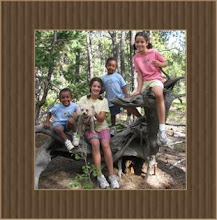
 Our sons are the two in the middle. The one in stripes with blue sleeves is 2 years 10 months old. He is a normal size for his age and has had normal growth. Our son in the pink is smaller and older, he is at this photo, 3 years and 6 months old. The clothing he was wearing a month later when we picked him up were size 18 months.
These are our boys at Easter 2011. You can see their growth. N (brown pattern tie) has had normal growth and  is now 5 years 8 months. K (orange stripe tie) has had more growth than we ever expected. He is now 6 years and 4 months old. They are so very handsome!!!!

Sunday, May 8, 2011

radio show on adoption

I wanted to make you aware of a web site. I have noted this one before. Creating A Family. They have a radio show that I am linking here that directly talks about Ethiopia. There are a bunch of great shows that will help you along the way on every phase of adoption. This particular broadcast features Melissa Fay Green.
Check it out: Creating A family radio show

Thursday, May 5, 2011

Beyond Consequences offering a two day training for families with out of control, aggressive, and violent children

This seminar is being offered by Beyond Consequences and looks like it will be really good for anyone who is dealing with a child who is exceptionally hard to handle. You can Check it out, register, see a simple questionnaire to see if this is for you and learn about Beyond Consequences by clicking this link.

A Two Day Intensive Training for Families with
Out-of-Control, Aggressive, and Violent Children


This specialized training will equip you and empower you
to re-establish safety, peace, and order back into your home.


Saturday & Sunday

July 23 & 24, 2011

Denver, CO


Topics will include:
  • Verbal and Physical Aggression

  • Certification for Violence Containment

  • Defiant and Unmanagable Behaviors

  • Threatening Behaviors to Self and Others

  • Destructive Behaviors to the Home

  • Significant Mood and Regulatory Disorders

  • Complete Disregard to the Word "No"

  • Reactive and Massive Meltdowns

  • Chronic Disrespectful at All Levels

  • Impulsive Hitting and Kicking

  • Unsafe Sibling Interactions

  • Intentional and Targeted Malicious Acts

  • Reactive Parenting That Develops From Constant Conflict

  • Parents Who Are Tired of Being Abused

  • Restoring the Desire to Parent Again
Two of the top experts in the field of Childhood Trauma,
recognized around the world, will be leading this training
and giving you tools and solutions that work.

Dr. Ronald S. Federici
and
Heather T. Forbes, LCSW

Both of these experts have not only worked in the
mental health field with aggressive and violent
children but they both have, more importantly, raised
children of their own with these types of unnerving
behaviors. They know your situation from a personal
experiential level. They "GET" it!

Tuesday, April 26, 2011

FREE BOOK

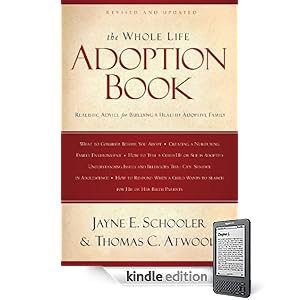
Just wanted to let you know that Amazon is offering a FREE kindle book on Adoption. I have not read this book and do not have a Kindle. If I did I would snap this up.  But many of you may have one and this is a good opportunity. It sounds like a great book and one I may just put on my book list to read. The reviews are good too. So, follow this link over and pick up the free book.

Publishers note:

The Whole Life Adoption Book: Realistic Advice for Building a Healthy Adoptive Family

Authors Jayne E. Schooler and Thomas C. Atwood share insights into every aspect of adoption. This powerful resource addresses the needs and concerns facing adoptive parents while offering encouragement for the journey ahead.

Wednesday, April 20, 2011

Adoption Tax info

Ok, I know tax season is now officially over. However, I understand that there are a lot of people, us included, who are having issues getting the refund, or it is just delayed.

Here are two posts on a great resource web page that address the issues.
1. Info on the Adoption Tax Credit
2. Info on the delay
3. 6 things to know

Hope this helps

Monday, April 18, 2011

MOWA/MOWCYA court news

Just wanted to direct your attention to a few newish resources and articles regarding the MOWCYA slowdown.

The actual notice from MOWCYA regarding the slow down -original statement. This is a great thing to read for yourself. It is clear and well laid out with thought and intention. 

Department of State notice regarding a statement issued by MOWCYA more recently affirming the slow down for ethical integrity. While Ethiopia has not stated at this time the actual number it will be reviewing per day, the US Embassy feels that 5 is what can be expected.

An interesting article written as opinion by an Ethiopian national on this topic.

With this in mind, I have had some families note that with their agency families who have received referrals after this proclamation are still receiving court dates for as early as May. It will be interesting to see how things adjust to the new normal.
Related Posts with Thumbnails

Sponsor a Child

Disclaimer

The content on The Wayfarer:Ethiopian Adoption Resource Blog is for informational purposes only. We are adoptive parents, but we are not professionals. The opinions and suggestions expressed here are not intended to replace professional evaluation or therapy, or to supersede your agency. We assume no responsibility in the decisions that families make for their children and families. There are many links on this blog. We believe these other sites have valuable information, but we do not necessarily share all of the opinions or positions represented by each site, nor have we fully researched every aspect of each link. Please keep this in mind when visiting the links from this page.
Thank You.

A Links Disclaimer

I post a lot of links. I do so because I feel that the particular page has good information and much to offer. I do not necessarily support all that each site has to say or promote. I trust you to sift the links for information you feel is worthwhile to you. Each person's story and situation are unique and different things will be useful or not useful to each one in different ways. Please use your own discretion when accessing links and information.